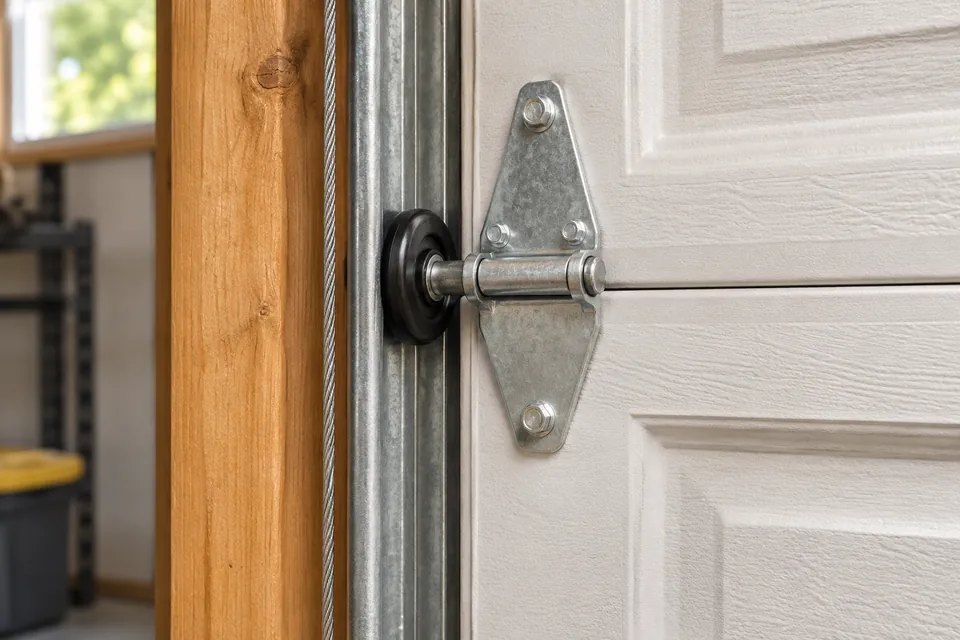
The track guides the rollers, but its shape, attachments and compatibility with the door all matter. A visible bend does not establish a safe repair method.
First distinguish a rail problem from a derailed door
This guide concerns the physical track system on a door that may be retained. If a roller has left the rail, the door is hanging unevenly or a section is unsupported, begin with off-track door recovery. Stabilizing that situation takes priority over comparing replacement rails.
If the track remains in place but a roller is worn or damaged, roller replacement is a different scope. A technician should identify which component is defective instead of treating every binding or noisy door as a track fault.
Describe the event, without reproducing it
Tell the provider about an impact, a newly visible bend, a moved support or a change noticed after other work. Report the door’s current position and anything already observed from a safe location. You do not need to trace the entire rail or stand beneath it to collect more detail.
Clopay identifies bent or twisted tracks and insecure attachments as concerns for professional repair. DASMA advises against operating a door when visible damage is found. Another powered cycle is not a useful way to demonstrate the problem.
Ask what the rail is attached to
A useful assessment separates the rail itself from the brackets, rear supports and building attachment. Ask the provider to explain whether the proposed work addresses a damaged track, alignment, an attachment problem or several connected defects.
If the surrounding framing is questionable, the project may need a building contractor or design professional as well as door service. Replacing metal alone does not establish that the support is sound. Ask who will assess that condition and what work must happen before the door returns to use.
Require a compatible track proposal
Track and door sections are a coordinated system. DASMA notes that section thickness, door weight, headroom and opener position can affect whether an existing track suits a replacement door. A retained door also needs a rail specification appropriate to its assembly, rather than an arbitrary similar-looking part.
Request the proposed corrective method or replacement scope, affected rail sections, related hardware and professional completion checks in writing. If a complete new door is recommended, compare that separate proposal using the door replacement guide. Confirm your Silver Spring address, residential door type and visit charge directly with the provider before arranging work.
Make the track scope specific
- What caused the alignment or damage, and are the supports and framing sound?
- Which rail sections and attachments need work, and how is compatibility established?
- What professional operating and safety checks, total price and warranty are included?
Common questions
Does a bent rail always mean the complete door needs replacement?
A bend alone does not establish the appropriate scope. The decision depends on the damage, available compatible parts and condition of the door and supporting structure. Ask for the findings behind either a track repair or a complete replacement proposal.
Can a new door simply use the old tracks?
That must be established for the particular door assembly. Existing rails may be unsuitable because of the new door’s dimensions, weight, required clearance or operator arrangement. Ask the installer to explain the approved track configuration.
Should I adjust the track bolts to stop rubbing?
Leave adjustment of a suspected track fault to a trained door-systems technician. Moving a rail or support can change how the door is restrained. Describe the rubbing already noticed without operating it again to test an adjustment.
Read a little further.
Sources reviewed November 11, 2026. Follow the manual for your exact door and opener. These resources support general guidance, not a remote inspection.
- Clopay: Garage Door Maintenance Guide Identifies bent/twisted tracks and attachment concerns; recommends professional track repair.
- DASMA: Garage-door safety tips Explains track/section compatibility and model-specific door-system requirements.
- DASMA TDS 174: Checking a residential sectional garage door for damage Supports stopping use after visible damage and obtaining appropriate help for questionable framing. No operational inspection procedure is reproduced here.