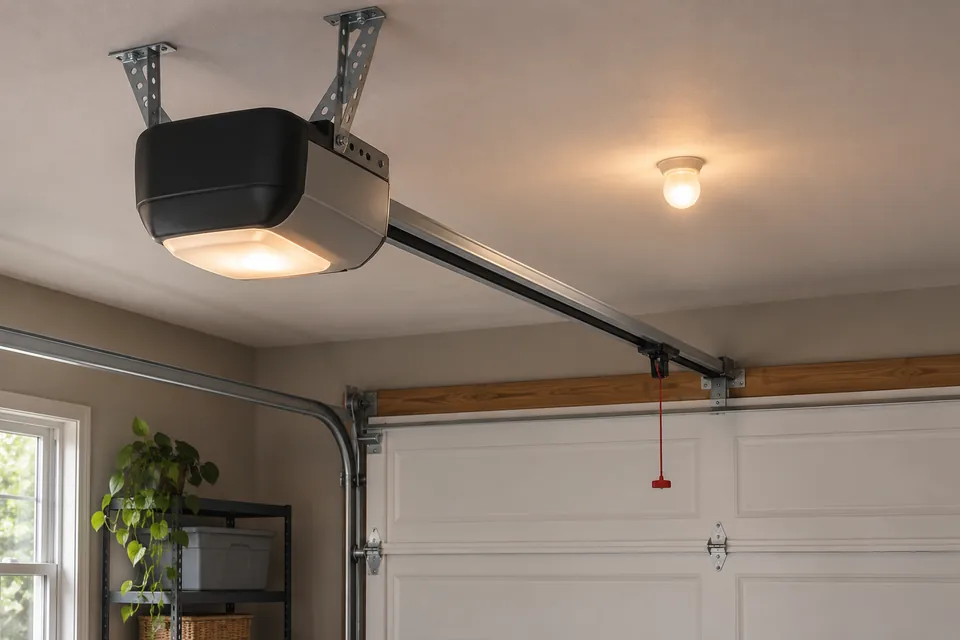
Use this guide when the failed component is unknown. A useful repair proposal connects the observed symptom to an inspected fault and a defined remedy.
One command passes through several systems
The door assembly, the operator and the command devices work together. A motor may be responding to resistance in the door rather than failing internally. DASMA identifies binding or awkward movement as a possible counterbalance concern requiring professional attention; a more powerful opener is not a substitute for addressing it.
Conversely, a command may not reach the operator as expected. Chamberlain documents a wall-control lock function that can exclude remote commands on applicable models. That example shows why a remote response alone cannot establish motor failure. It does not establish the cause on another make or model.
For a request specifically about exterior PIN access, app connectivity or the operator’s backup battery, use the separate keypad, smart setup and backup-battery guides. Those pages cover compatibility and handover questions for those functions.
Bring the sequence, without recreating the fault
Describe what happened during ordinary use before you stopped: whether there was a click, hum, light indication or partial movement; which control was used; and whether a power interruption or recent repair preceded the change. Report an indication exactly as observed rather than translating it into a diagnosis.
Share a model number from existing paperwork or a safely accessible label. Do not climb to obtain it or run extra cycles to compare controls on a suspect door. An unknown detail is preferable to an unsafe test.
Ask the technician to explain the finding
Request an explanation of the inspected fault and why the proposed work addresses it. The written scope should distinguish labor to diagnose from parts and labor to repair. Clarify what happens if inspection reveals a door-system fault instead of an operator fault, and what further work requires approval.
Once a component is identified, use the narrower guide: opener drive repair covers the retained operator’s drive mechanism; logic-board replacement covers a confirmed electronics fault. For a command-device issue, see remote replacement and programming; a confirmed photo-eye circuit issue belongs under safety-sensor repair.
Completion includes the safety functions
CPSC warns that an opener without functioning reversal protection presents an entrapment hazard. Ask which model-specific operating and safety checks the technician will complete after repair, with the door system in a safe condition. A single successful movement does not document those checks.
If replacement is proposed, ask what makes repair unsuitable and what the new operator package includes. Keep that choice separate from replacing the door itself; the new-opener installation guide addresses compatibility and installation scope. Before arranging a Silver Spring visit, confirm exact-address coverage, the assessment charge and the provider’s identity.
Questions for an unknown-fault opener assessment
- Which inspected finding distinguishes an operator fault from resistance in the door?
- Does the proposed total include diagnosis, the specified part, installation and reprogramming as needed?
- What model-specific safety checks and written repair warranty will be documented?
Common questions
Does a humming opener prove the motor needs replacing?
No. The sound alone does not establish which component failed or whether the door is resisting movement. Stop using a struggling system and let the technician assess the connected door and operator before choosing parts.
Should every blinking light be treated as a sensor fault?
No. Indicators depend on the model, and manufacturer guidance may distinguish sensor circuits, control settings and other faults. Record what you already saw and have it interpreted using the exact model’s documentation.
Can I authorize diagnosis without agreeing to a replacement?
Ask the provider before the visit how the diagnostic charge works and whether a repair or replacement requires separate approval. Obtain the proposed scope and total before authorizing additional work.
Read a little further.
Sources reviewed November 11, 2026. Follow the manual for your exact door and opener. These resources support general guidance, not a remote inspection.
- DASMA: Garage-door safety tips Supports professional attention to binding or counterbalance problems and the importance of the exact product manual.
- Chamberlain: Opener lights flashing and door will not close Manufacturer-specific examples distinguish sensor issues and wall-control lock behavior. Codes and procedures are not universal; this guide does not reproduce overrides or testing steps.
- CPSC: Non-reversing automatic garage door openers are a hazard Supports the importance of reversal protection and professional service for binding or unbalanced doors. Historical injury totals are not used.