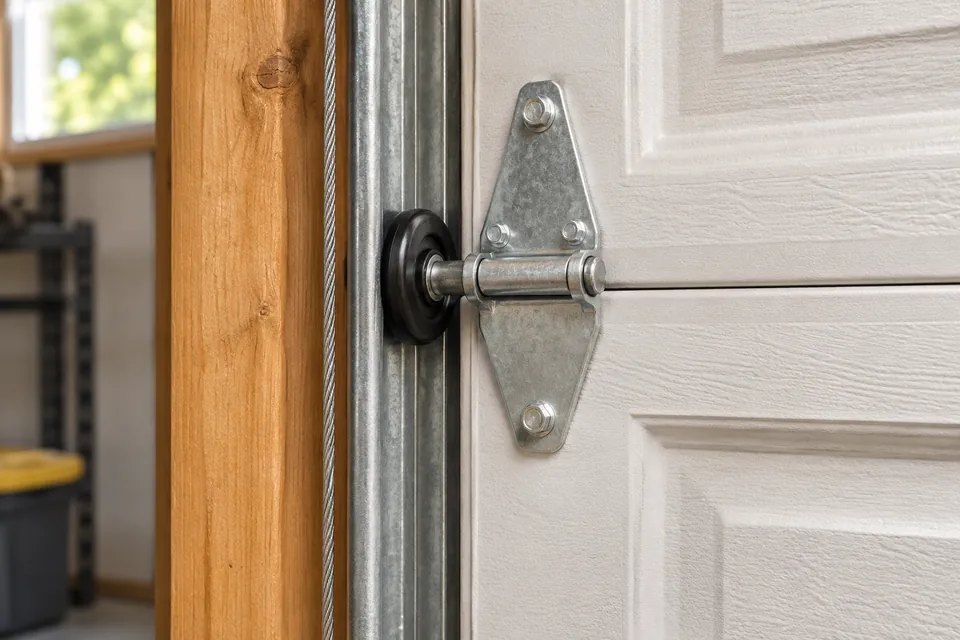
Lift cables are part of the loaded door system. A cable replacement assessment should explain the cable condition and any connected drum, bracket, spring, or track concern.
Lifting cables and containment cables have different jobs
This guide concerns the lifting cables associated with the door’s spring system and bottom brackets. DASMA advises that worn or frayed lifting cables be replaced by a trained technician because of the high spring tension involved.
An extension-spring containment cable serves a different purpose: it helps contain a broken extension spring. If that is the proposed work, use the spring containment-cable guide. Ask the provider to name the cable type in the estimate rather than writing only “safety cable.”
Share the history you already have
Tell the provider whether you noticed fraying, a hanging cable, a sudden uneven position, or a change after an impact or recent repair. Report what you can see from a safe position; leave hidden details unknown. Another opening cycle is not needed to explain the problem.
A crooked or derailed door needs controlled recovery as well as a component assessment. The off-track door recovery guide covers that situation. Do not assume that replacing one visible cable resolves every consequence of the event.
Ask what the inspection found beyond the cable
Have the technician explain whether the cable itself is worn, whether it has lost its intended routing, and what condition was found at the associated hardware. Ask whether the drums, attachments, spring system, rollers, and tracks need separate work. These are inspection questions, not a diagnosis from the cable’s appearance.
If both sides are included in a proposal, ask why and have the quantities stated. The replacement should be specified for the actual assembly. A generic package name does not explain the cable specification or justify replacing otherwise unrelated parts.
Make the repair and completion checks explicit
Separate cable parts, related hardware, labor, the visit charge, and the total you will authorize. Ask which additional findings would require your approval before the work continues. If a failed spring is also identified, compare that separate scope with the spring replacement guide.
Ask how the technician will verify the repaired door’s balance, movement, and opener safety under the applicable manuals. You do not need to perform those checks on a suspect door. For a Silver Spring visit, confirm the exact address, residential door type, and appointment availability directly with the provider.
Keep the cable estimate specific
- Which lifting cables and quantities are included, and how are they matched to this door?
- What related damage was found at drums, brackets, springs, rollers, or tracks?
- Which completion checks, total charges, and written parts/labor warranty apply?
Common questions
Can a hanging cable simply be put back on its drum?
Its position does not establish the cause or confirm that the remaining system is safe. Leave it untouched and ask a trained technician to assess the cable and connected hardware before deciding whether replacement or other work is needed.
Does cable damage automatically require a new door?
A cable concern alone does not establish that the complete door needs replacing. Ask the provider to identify the actual damage and explain why the proposed cable, hardware, section, or complete-door scope is necessary.
Is a closed door safe to repair myself?
Closed position does not remove the hazards from loaded spring-system hardware. Bottom brackets and cables still require trained handling; do not loosen them or disconnect a door with suspected damage.
Read a little further.
Sources reviewed November 11, 2026. Follow the manual for your exact door and opener. These resources support general guidance, not a remote inspection.
- DASMA: garage-door safety tips Distinguishes lifting and extension-spring containment cables and explains cable and bottom-bracket tension hazards. General guidance; exact assemblies differ.
- Clopay: garage-door maintenance guide Identifies frayed cables as a professional replacement concern. Its general maintenance procedures should not be applied to a suspected damaged door.
- DASMA TDS 174: checking a sectional door for damage Supports stopping inspection and avoiding operational checks when a problem is visible. This page does not reproduce the document’s physical inspection procedures.