Ask what will be inspected, which parts need lubrication, and how findings will be recorded. Door and opener care requirements can differ.
Make sure planned care matches the reason for calling
Preventive maintenance reviews wear, cleanliness and upkeep on an otherwise operating door. A new squeal, rattle or vibration needs noise diagnosis before anyone assumes lubrication is the answer.
A focused opener safety inspection addresses entrapment protection, reversal and control compliance. Ask whether it is included or separately scoped; 'tune-up' does not establish what was verified.
Use the manuals to set the care plan
Share accessible model information, prior invoices and changes such as a replaced section or added material. Let the technician identify labels requiring access at height. Keep both manuals together.
Ask the provider to reconcile manufacturer instructions with condition and usage. Inspection, lubrication and finish care need not share one interval. Have the next visit and earlier reasons to call written down; a calendar reminder should never postpone assessment of a developing fault.
Define the inspection before approving extra work
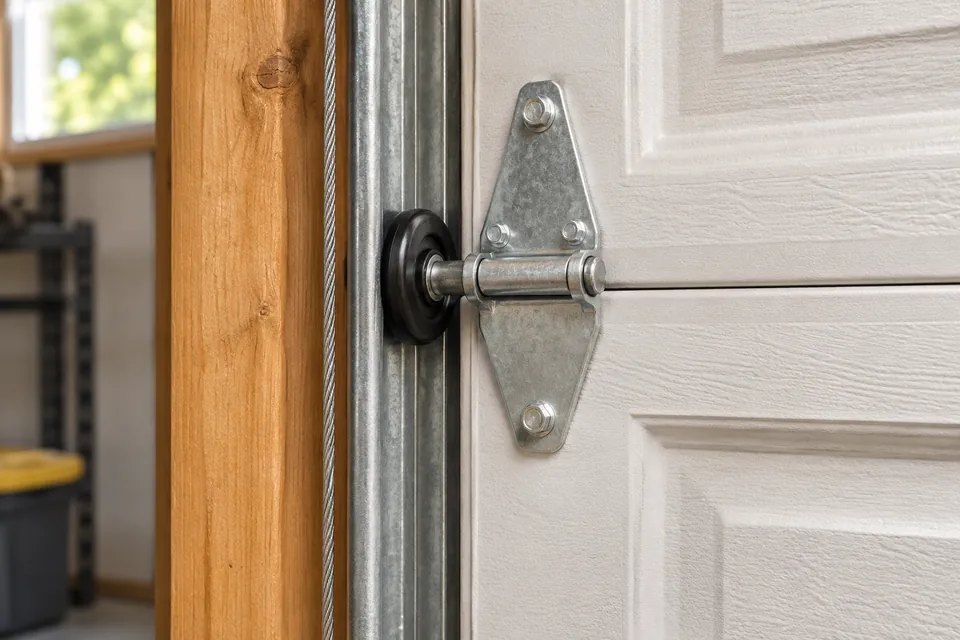
The scope can identify rollers, hinges, track attachments, cables, springs, sections, seals, handles and warning labels for professional review. The report should distinguish serviceable parts, conditions to monitor and defects requiring repair.
DASMA's damage guidance says a problem found during visual inspection takes priority over operational inspection. Ask the technician to establish safe conditions before movement or manual-specific physical tests. Spring adjustment, cable work and bottom-bracket work belong to qualified technicians.
Specify the product and the surface being treated
There is no single lubricant instruction for every roller, door and opener. For example, Clopay's steel-door care manual specifies roller-bearing lubrication while excluding the roller tire. Its finish-care instructions also distinguish finishes with different waxing requirements. Those details make identifying the actual product useful.
Ask which approved lubricant and application points apply to this assembly, which surfaces should remain untreated, and whether cleaning or finish preservation is included. Do not accept spraying the whole system as the work description. Lubrication cannot repair a cracked hinge, worn bearing or damaged track.
Keep a record that makes the next visit useful
Request dated findings, parts treated, product used, approved repairs and completed checks. Record unresolved concerns and follow-up separately from completed work. Retain this with the manuals and warranty paperwork.
Before arranging a Silver Spring visit, confirm the address, door type, scope and total with the provider. Establish who can authorize additional repairs.
Details to request in the maintenance proposal
- Door and opener identification, manuals used and inspection items included.
- Approved lubrication and cleaning scope, with exclusions identified.
- Separate authorization for defects needing repair or adjustment.
- Written findings, completed verification and condition-based follow-up.
Common questions
Should every garage door receive the same scheduled tune-up?
No. Use the identified door and opener instructions, usage and findings to plan care. Different tasks may have different schedules; a new fault takes priority.
Does maintenance include replacing worn parts?
Only if that work is included and authorized. Ask for the finding, compatible replacement and additional cost in writing before a maintenance visit becomes a repair job.
Can I ask for lubrication alone after a new noise starts?
Describe the noise and changed movement first so the provider can determine the appropriate visit. Do not repeatedly operate the door to reproduce the sound.
Read a little further.
Sources reviewed November 11, 2026. Follow the manual for your exact door and opener. These resources support general guidance, not a remote inspection.
- Clopay: Steel Garage Doors Care and Maintenance Product-specific inspection, roller-bearing versus tire lubrication, finish care and high-tension hardware warnings.
- DASMA TDS 174: Checking a Residential Sectional Garage Door for Damage Observed damage takes priority over operational checking; adjustment and repair require trained technicians.
- DASMA: Garage-door safety tips Retain model-specific manuals; trained-technician scope for springs, cables and bottom brackets.